Critical milestone advances school’s path to full self-reliance and student health
FOR IMMEDIATE RELEASE:
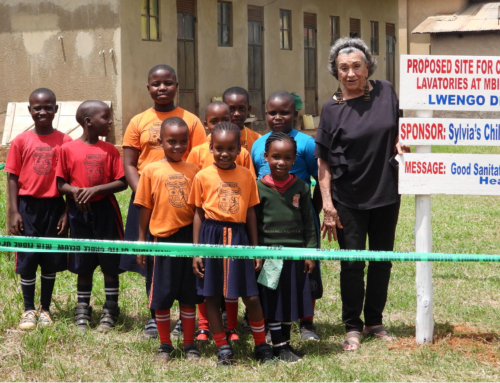
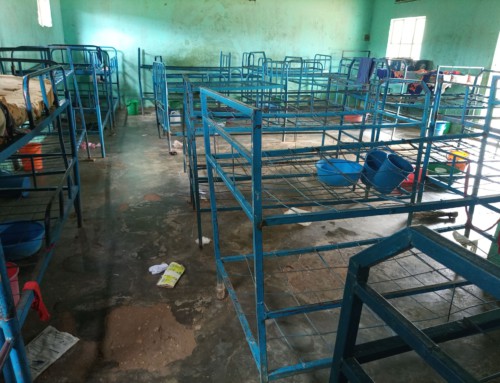
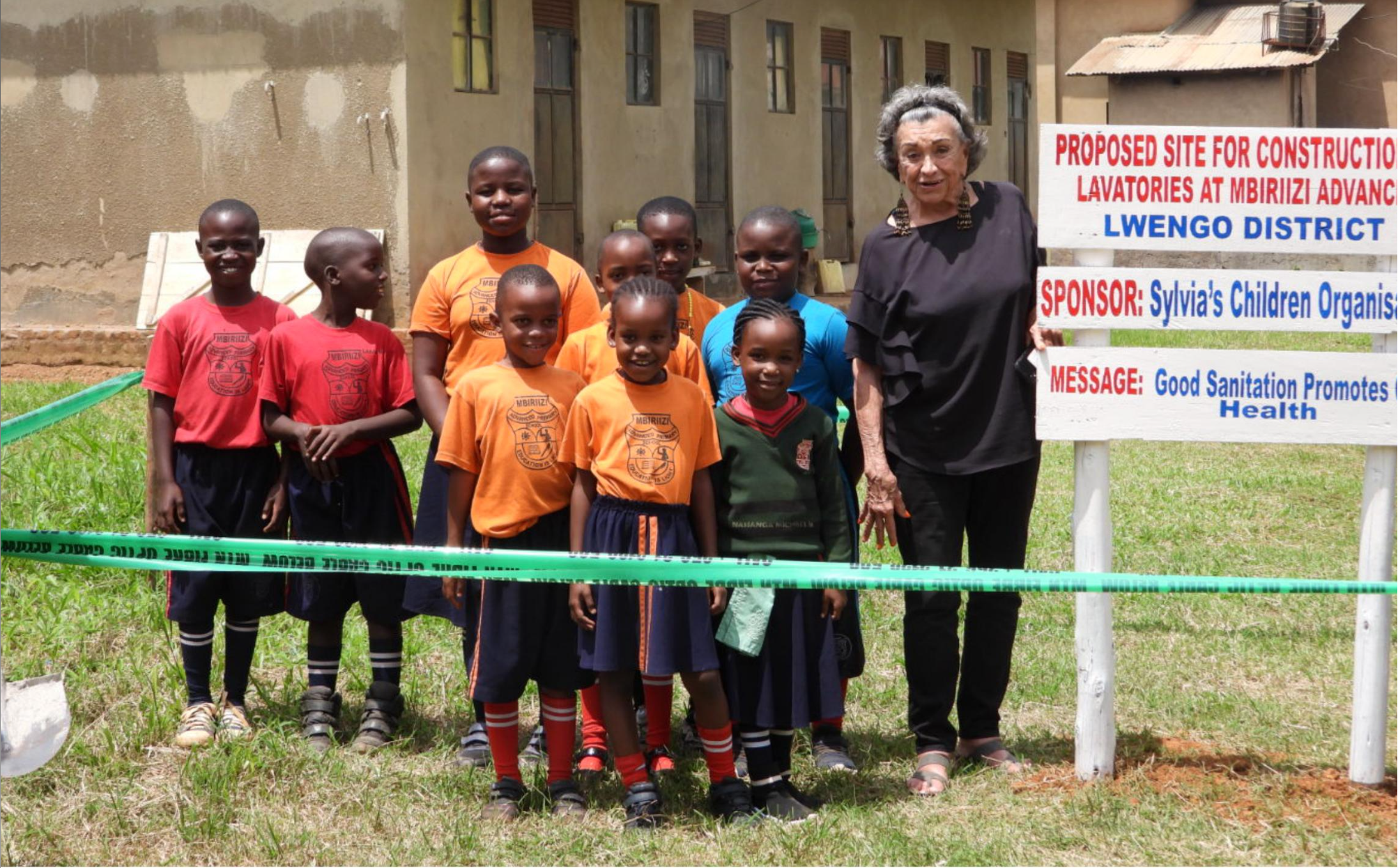
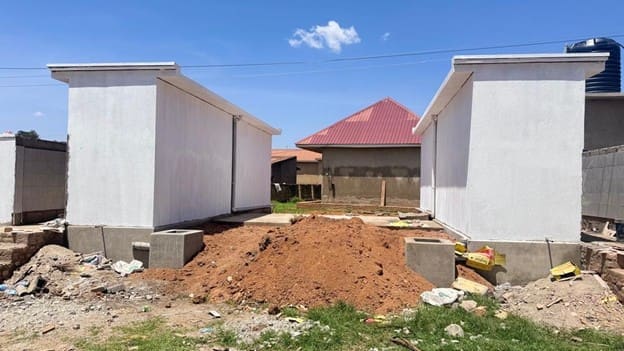
(HOLMDEL, N.J.) – Sylvia’s Children, the U.S.-based nonprofit founded by global humanitarian and visionary philanthropist Sylvia Allen in 2003, has completed new boys’ and girls’ lavatory facilities for the over 1,000 children that use them each day at the Mbiriizi Advanced Primary and Daycare School in the Lwengo District of Uganda. This marks one of the final capital infrastructure projects needed for the school to operate as a fully self-sustaining institution.
The project, which began in early December 2025 and is now complete, was carried out by a team of 10 local workers and funded through $33,000 in individual donations and Rotary International grants. The effort was led by the North St. Paul–Maplewood–Oakdale Rotary in Minnesota with support from 20 additional Rotary clubs across District 5960 and generous financial support from the District 5960 Grants Committee..
The new facilities feature modern flush systems designed as squat toilets, a culturally appropriate and hygienic solution that significantly improves sanitation, privacy, and health outcomes for hundreds of students and staff.
“Safe, dignified sanitation is not a luxury. It’s foundational to education, health, and human dignity,” said Allen. “These lavatories represent far more than new buildings. They are a critical step toward long-term sustainability and self-reliance for the school and the community it serves.”
Founded in 2003, Sylvia’s Children supports the Mbiriizi Advanced Primary and Daycare School, located near Masaka, Uganda. Since that time, Allen has single-handedly raised more than $3 million, enabling the school’s growth from four buildings to 26, and the development of a comprehensive ecosystem that has included:
- A 6,000-square-foot medical clinic serving both the school and surrounding villages
- Clean-water wells
- Teacher and orphan housing
- Agricultural, coffee-farming, and livestock programs
- Scholarships and university tuition for hundreds of students, many orphaned due to the HIV/AIDS epidemic
Today, the school has been ranked among the Top 100 of more than 12,000 primary schools in Uganda, a testament to Allen’s belief that education and self-sufficiency are the most powerful tools to end poverty.
The completion of the lavatory facilities represents one of the final capital campaign efforts required to support the school’s long-term independence. Combined with 10 revenue-generating initiatives already in place, supplementing tuition income, the campus is now positioned for sustained success.
Allen, who was recently named one of the Global 100’s 2026 Winners for Women in Leadership in the Visionary Philanthropist category, continues to blend compassion with pragmatic, scalable solutions.
“When you invest in infrastructure that respects people and lasts, you change outcomes for generations,” Allen said. “This is how real transformation happens—one essential building block at a time.”
For more information about Sylvia’s Children and its ongoing initiatives, visit www.sylviaschildren.org.
SIDEBAR: WHAT’S NEXT — A Scalable Medical Clinic Model for the Developing World
Building on more than two decades of hands-on humanitarian work, Sylvia’s Children is now developing a prototypical hub-and-spoke medical clinic model designed to be replicated in developing nations worldwide.
The initiative will include:
- A self-sustaining clinic design
- A step-by-step construction and operations manual
- A framework that allows nonprofits to build, fund, and operate clinics independently
The need is urgent. In Uganda’s Lwengo District, home to more than 300,000 people—half of them under the age of 17—there is currently just one doctor for every 25,000 residents.
“If we can bring accessible, community-based clinics to underserved regions, we can radically change those statistics,” said Allen. “This model is about empowerment, not dependency—and about giving nonprofits the tools to save lives at scale.”